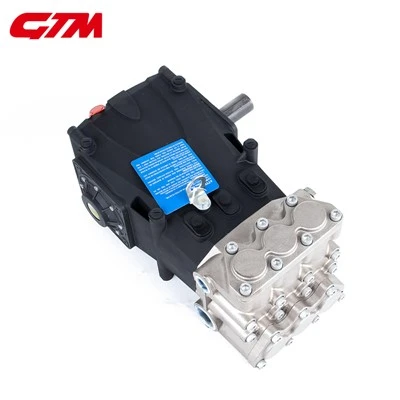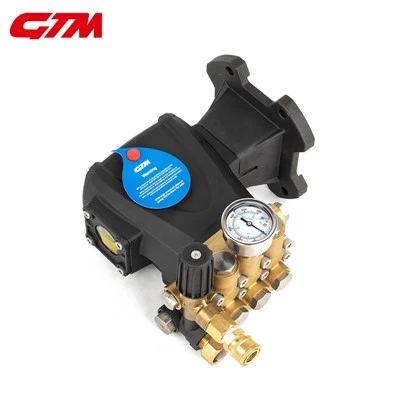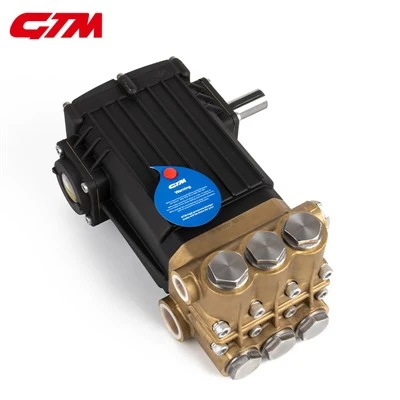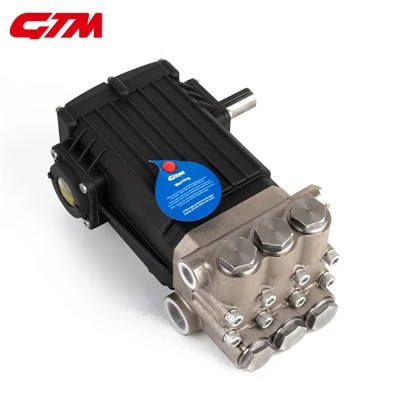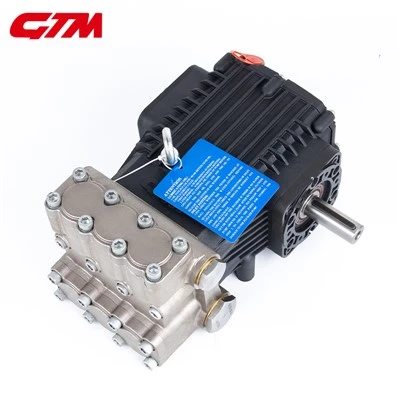

A crankshaft pump is an important hydraulic component. It uses the rotation of the crankshaft to drive a plunger to reciprocate within a cylinder, thus achieving the oil suction and discharge process. The following is an explanation of the crankshaft pump's working principle:
The crankshaft, through connecting rods and pins, drives the plunger to reciprocate within the cylinder. The crankshaft's rotational motion is converted into the plunger's reciprocating motion, thereby driving the oil suction and discharge process.
When the plunger moves to the right, the oil chamber volume in the plunger orifice increases, creating a vacuum. Oil from the tank is drawn into the cylinder through the pump's lower channel and the inlet check valve. At this time, the discharge check valve closes due to oil pressure. The inlet check valve's function is to prevent oil from flowing back into the tank, ensuring that oil is smoothly drawn into the cylinder.
When the plunger moves to the left, the oil chamber volume in the plunger orifice decreases, and oil forces open the discharge check valve and enters the working system. At this point, the suction check valve closes due to oil pressure. The discharge check valve controls the flow of oil to the working system, ensuring that the oil flows in the specified direction.