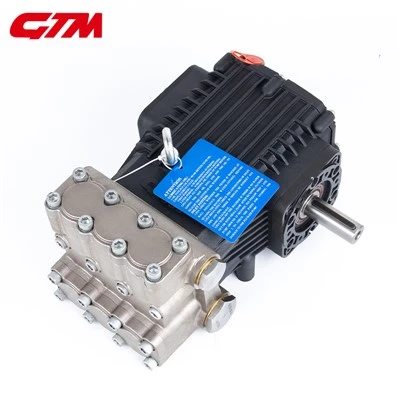

The working principle of diesel high-pressure cleaning equipment involves a precise process of energy conversion and fluid dynamics. Its core lies in efficiently converting the chemical energy of diesel fuel into the kinetic energy of the high-pressure water jet required for cleaning.
1. Power Source Conversion Stage
The equipment uses a diesel engine as the initial power source, generating heat energy through the combustion of diesel fuel. Inside the engine cylinder, diesel fuel mixes with air and is compressed and ignited, driving the piston in a linear reciprocating motion. This motion is converted into the rotational motion of the crankshaft via a connecting rod mechanism, achieving the initial conversion of chemical energy into mechanical energy. Key parameters in this stage include engine speed (typically controlled between 1500-3000 rpm) and power output (ranging from 5-50 kW depending on the equipment model), directly affecting the subsequent pressurization capacity.
2. High-Pressure Pump Pressurization Stage
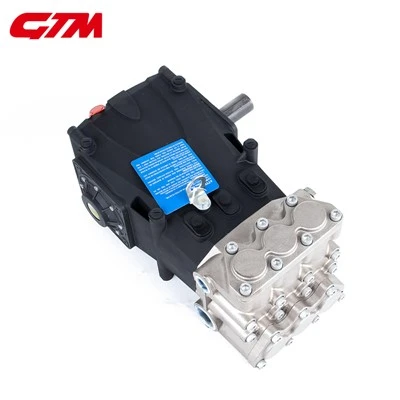
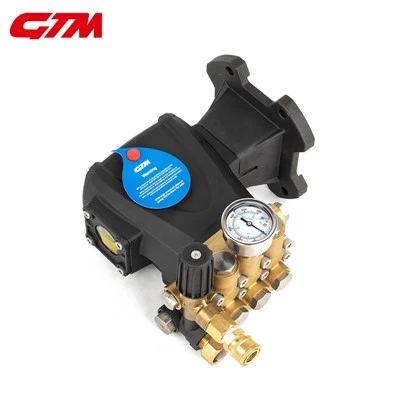
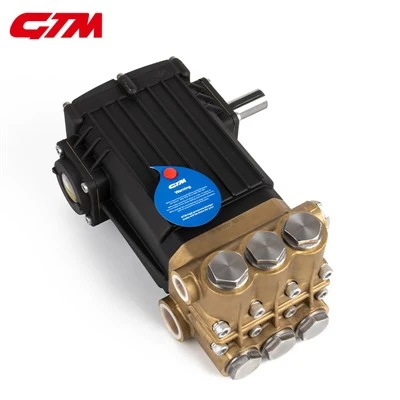
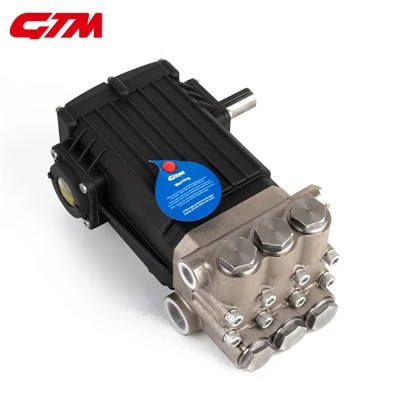
The crankshaft rotational power is transmitted to the high-pressure pump via a transmission device (mostly belt or gear drive). This pump uses a plunger-type structure, achieving fluid pressurization through the reciprocating motion of the plunger within the pump chamber. As the plunger moves upward, the pump chamber volume decreases, and the diesel fuel is compressed to a pressure of several hundred MPa (typically 200-500 MPa). As the plunger moves downward, new fuel is drawn in through a one-way valve. This process requires strict control of the plunger stroke (typically 20-50 mm) and movement frequency to ensure pressure stability.
3. Fluid Dynamics Conversion Stage
The pressurized diesel fuel is delivered to the spray nozzle system through a special high-pressure pipeline (pressure rating typically ≥600 MPa). At the nozzle, the fluid undergoes a second energy conversion: when the diesel fuel passes through a ceramic or hard alloy nozzle with an orifice diameter of 0.1-0.5 mm, according to Bernoulli's equation, the flow velocity increases sharply to 300-600 m/s, converting pressure energy into kinetic energy, forming a supersonic water jet with powerful impact (Mach number can reach 1.5-2.5).
4. Cleaning Efficiency Achievement Stages
When the high-speed jet acts on the surface being cleaned, three cleaning mechanisms are generated:
Mechanical Impact: Directly peels off the dirt layer (impact pressure can reach 500-1000 bar)
Cavitation Effect: Secondary shock waves generated by the collapse of microbubbles formed at the jet edge
Penetration: High-pressure water penetrates micro-cracks to remove deep-seated dirt.